Shelf Life: What Happens When a 360° Headset Goes Home on a Library Card
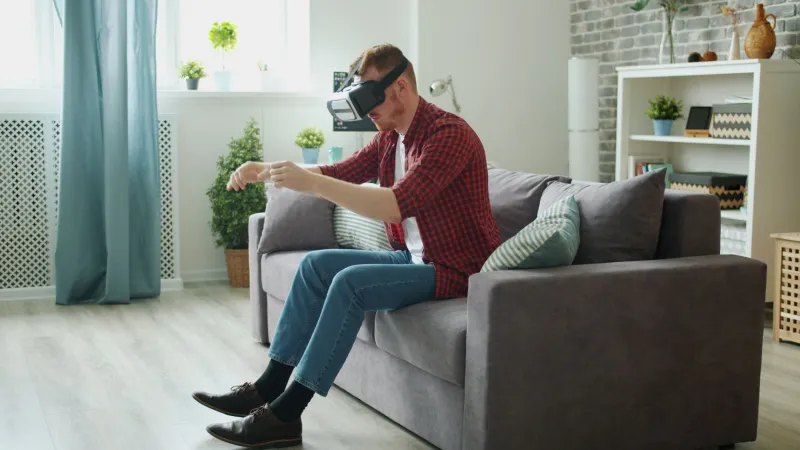
The most quietly radical thing in UK immersive tech right now might be a hold request. Not a festival queue, not a waiting list for a ticketed installation, but a library reservation for a headset that will be collected in a canvas bag and taken home for a fortnight.
That sentence would have sounded odd a few years ago. It does not now. Library services in several parts of the UK have moved from occasional demo sessions to actual lending: a headset, a curated set of spatial films, a cleaning kit and a printed sheet that answers the questions people are too polite to ask. The format has left the building.
For anyone who makes 360° work or runs an immersive venue, this is worth watching closely. It is a distribution channel that does not depend on a festival pass, a train fare to London or the confidence to walk into a dark room full of strangers.
The loan is the venue now
Immersive venues spend a lot of time on the first ten minutes: the welcome, the headset fitting, the reassurance that you can stop whenever you like. A library loan has none of that scaffolding. The borrower is in their own front room, possibly with a curious child, a dog and a cup of tea within reach. If the experience does not explain itself, there is no front-of-house team to rescue it.
That changes the design brief. Kit has to survive being unplugged, recharged and handed to someone who has never used a headset. Content has to make sense without a steward. Instructions have to work in large print, on a phone screen, and out loud.
The library is not trying to become a cinema. It is doing something more interesting: treating spatial media as a borrowable format, like a DVD box set or a museum pass. That is a different kind of access, and it asks different things of producers.
What actually goes in the bag
The services that seem to be making this work are not lending a bare headset and hoping for the best. They are lending a kit. Typically that means a headset with content preloaded, a charging cable, a lens cloth, disposable face-gasket covers, a quick-start card and a return checklist. Some add a QR code to a short video showing how to adjust the straps. A few include a simple stand so the headset is not left on a sofa cushion.
The important design choice is usually the absence of something: no account login, no companion app to download, no pairing ritual. Every extra step is a reason the kit comes back unused. If a borrower has to create a password before they can watch a three-minute piece about a Welsh quarry, the loan has already failed.
Loan periods tend to sit somewhere between a week and a fortnight. That is long enough to try things, short enough to keep the queue moving. Insurance and replacement costs are real considerations, but they are not the main barrier. The main barrier is staff time.
The catalogue is a programme, not a pile of hardware
A shelf of headsets is not a programme. The good library services curate. They pick a handful of pieces that work for first-timers, note the running time, flag whether it is 180° or 360°, and say plainly whether there is captioned or audio-described material. They think about seated experiences, gentle motion and content that does not require standing in the middle of a room.
Rights are the awkward bit. Lending a headset to an individual at home is not the same as screening a film to an audience. Producers who want their work in this channel need to offer a library licence that is clear about scope, term and what happens if a borrower shows it to a neighbour. Ambiguity here tends to end with the kit sitting in a cupboard.
The practical answer is a "library master": a clean file, sensible chapter markers, subtitles as a separate track, no reliance on a live internet connection, and metadata that a cataloguer can actually read. If a piece needs a companion website to make sense, it probably is not ready for a loan scheme.
Cleaning rotas and the twenty-minute turnaround
The unglamorous truth of lending is the turnaround. Face gaskets need wiping, lenses need checking, batteries need charging, firmware needs the occasional update. A headset that comes back at 4pm on a Friday and goes out again on Saturday morning has to be ready in between.
Services that have thought this through build a simple rota and a checklist that a non-specialist can follow. They keep spare cables, because cables disappear. They keep a note of which content is on which device, because re-loading a headset takes longer than people expect. They accept that a percentage of loans will come back with a flat battery and a missing cloth, and they plan for it rather than treating it as a crisis.
None of this is difficult. It is just ordinary operational work, and it needs to be budgeted as such. A lending scheme that relies on one enthusiastic member of staff is a scheme that ends when that person changes jobs.
Staff confidence beats staff expertise
Librarians are not being asked to become technologists. The ones who make this work tend to say the same thing: you need a script, not a specialist. A one-page set of answers to the obvious questions. A clear line about what to do if someone feels unwell. A referral path to a colleague who has done the training.
Confidence is contagious. A borrower who is handed a kit by someone who seems relaxed about it is far more likely to persevere when the headset asks them to confirm their play space. A borrower who is handed a kit by someone who seems anxious will probably leave it in the bag until the day it is due back.
Borrower support is the product
The best kits include a first-run card: how to put it on, how to adjust it, how to stop, and a phone number or email for help. Some point to a short web page with captions and a transcript. The tone matters. It should read like a friendly note from a person, not a compliance document.
Accessibility notes are part of this, not an afterthought. Which pieces are seated? Which have flashing sequences? Is there a version without head-tracked movement? Can the borrower use their own headphones? These details are the difference between a loan that opens a door and a loan that confirms someone's suspicion that this stuff is not for them.
What producers and venues can take from it
For producers, the lesson is straightforward: make a version of your work that can travel without you. Shorter chapters, clear titles, offline playback, subtitles, a note on runtime and comfort. A library master is not a compromise; it is a second release window.
For venues, the lesson is about reach. The festival circuit is good at many things, but it is not a universal front door. A library card is. Partnering with a local service, training staff, and lending a small curated kit can put spatial work in front of people who would never buy a ticket to an immersive showcase. It also generates the kind of feedback that only comes from a living room.
The 3D60 view is that immersive tech gets better when it stops assuming a specialist audience. A headset in a library bag is not a downgrade of the cinema. It is a different kind of screening, with a different audience, and a different set of design rules. The services doing it well are not waiting for a perfect model. They are lending, learning and adjusting the checklist. That is usually how access actually happens.