Short Runs, Long Memories: Rethinking Running Times for UK 360° Film
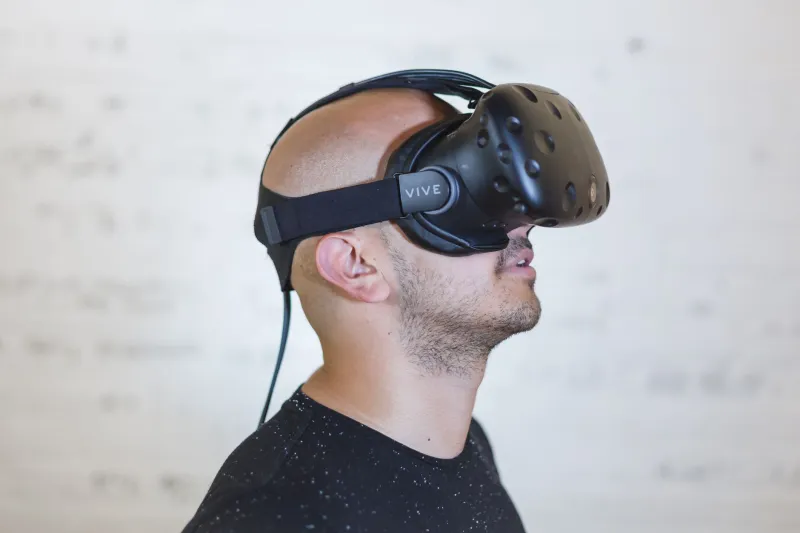
There is a moment every 360° producer knows. You hand someone a headset, they gasp at the first pan, and then somewhere around the third minute their hands drop to their sides and they start asking, politely, where the exit is. Not because the film is weak. Because wearing a screen on your face is physical work, and attention inside a headset runs on a completely different clock to attention in a cinema.
That is the informal 'three-minute rule' doing the rounds among UK creators — the hunch that a 360° piece should land somewhere under three minutes if it wants to hold a general audience. Nobody has published it as a standard. Plenty of excellent work ignores it. But as a starting point for pacing, it has more going for it than most of us like to admit.
Where the number actually comes from
The three-minute rule is not really about narrative. It is about the body. A consumer headset is a few hundred grams of plastic and glass strapped to your skull, warmed by its own electronics, and it asks your eyes to focus on a plane roughly two metres away while your brain insists you are standing inside a cathedral. That mismatch — vergence and accommodation pulling in different directions — is a low-level stressor. Most people tolerate it fine for a few minutes. Some never notice it at all. A meaningful minority start to feel clammy at minute four.
Add the social layer. In a gallery you are standing, often in a shared space, sometimes with a queue behind you. You cannot see your hands. You may not know where the bench is. All of that is cognitive load that has nothing to do with whether your footage is beautiful, and it accumulates.
Comfort is not the same as boredom
The mistake is reading short running times as a lack of ambition. Short does not mean slight. A tight 2'40" piece that resolves properly feels more generous than a sprawling nine-minute drift that only exists because nobody wanted to cut the drone shots.
Where the rule really earns its keep is in mixed-audience settings: a cultural venue on a Saturday afternoon, a festival stand with a turn-up crowd, a library workshop where half the group have never worn a headset. In those rooms, the audience did not choose your film specifically. You are asking for their attention and their tolerance at the same time, and it is polite to be brief.
The first twenty seconds are your trailer
Before running time, fix the handover. The opening beats should do three jobs: establish where the viewer is, give them a reason to move their head, and reassure them that nothing is going to jump out. A slow, clear first pan does more for retention than trimming forty seconds off the end.
Equally, the exit is part of the edit. If the last shot fades to black with no cue, the viewer is left spinning in the dark, wondering whether the piece has crashed. A gentle landing — horizon settling, sound lowering, a voice or caption telling them it's over — turns a disorienting stop into an ending.
Structure beats trimming
Rather than hacking minutes off, several UK makers are rethinking shape. Three patterns come up again and again.
Chapters over continuous takes. Breaking a longer piece into two or three clearly signposted sections gives the viewer permission to reset their posture and their eyes. A held title card or a brief audio breath between chapters reads as intentional, not broken.
Deliberate intervals. In gallery builds, a seated or standing pause between two shorter loops is not dead time — it is where people talk to each other. That conversation is often the thing they remember.
The escalation ceiling. If the piece is going to ask the viewer to look up, look down, turn fully around, or stand still while the world moves, budget that effort. Motion-heavy sections are expensive for an audience, and they should be short and clearly motivated.
A creator-friendly framework
Nothing here is a rule. Think of it as a set of defaults you can argue your way out of.
- Test at 90 seconds. Cut a trailer-length version first. If the idea does not land in ninety seconds, the problem is clarity, not duration.
- Default to three minutes for public, walk-up audiences. Mixed crowds, no briefing, shared space.
- Earn your way past five. Longer work needs one of three things: a seated audience, a captive audience who booked specifically for it, or genuine viewer agency — meaningful choices, free navigation, a reason to keep exploring.
- Build a breathing point at the two-thirds mark. Even fifteen seconds of lower stimulation helps.
- Always write an ending cue. Audio and visual. Every time.
- Test in the room, not in the studio. Run it on the actual headset, with the actual strap, at the actual ambient temperature, with someone who has never met you.
Testing with people who are not your friends
The most useful feedback comes from the person who has queued for six minutes and wants to know if it's worth it. Front-of-house teams see that person far more often than directors do. Give staff a short observation sheet: did the viewer move their head freely, did they reach for the headset, did they ask how long it was, did they take it off early. Three lines of data per viewer, collected across a weekend, will tell you more about running time than any amount of internal debate.
It also helps to watch for the wrong signals. A viewer who stands completely still for four minutes may be captivated — or frozen. Ask them afterwards. Do not guess.
Where the rule breaks down
Plenty of UK work justifies a longer sit. Seated, well-briefed, single-viewer setups in a dedicated booth can comfortably carry eight or ten minutes. Documentary and observational pieces often need time to build trust. Live performance capture, where the viewer is effectively a member of an audience, can run long because the social framing carries the attention. Heritage reconstructions in a seated gallery with a steward on hand are a different proposition entirely from a headset on a stand in a busy foyer.
The point is not to enforce brevity. It is to stop treating duration as a neutral creative choice when it is really a contract with your audience.
The short version
Three minutes is not a law, it is a courtesy. Default to it for public, walk-up, mixed-experience audiences. Structure longer pieces so people can breathe. Write an ending. And test with strangers in the actual room, because the clock that matters is not the one in your edit suite — it is the one in the viewer's inner ear.