Unlabelled: What a Small UK Venue Learned When It Stopped Announcing the Format
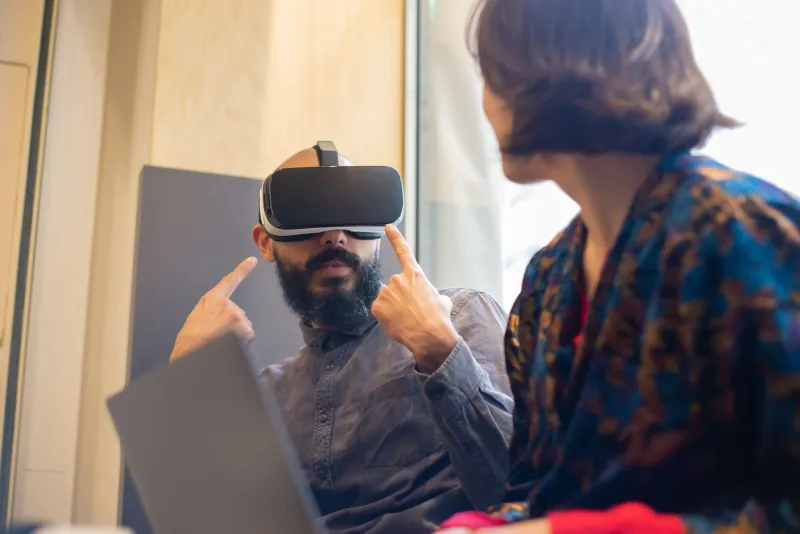
At a community arts centre in Sheffield, on a damp Thursday in October, we ran a small experiment. Twenty-six people. Same 90-second scene — a slow walk through a city market — shown three ways: flat on a wall, stereoscopic 3D on a passive screen, and 360° video in a headset. No programme notes. No logos. No one said the word immersive.
We called it a blind test, but it was really a listening exercise. The question wasn't which format won. It was: what changes when you remove the label?
One Scene, Three Screens, No Clues
The scene was deliberately ordinary. A market, a busker, a pigeon. We wanted texture and movement, not spectacle. Each viewer experienced all three versions, in rotating order, with a short break between. We asked them to jot down three words after each. Then we talked.
The first surprise was vocabulary. People didn't reach for technical terms. They said 'closer', 'busier', 'I didn't know where to look', 'it felt like I was in the way'. The 2D version was described as 'calm' and 'easy'. The stereoscopic version often got 'layered' or 'like a diorama'. The 360° version got 'wobbly', 'big', 'I turned the wrong way'.
No one said 'stereopsis'. No one said 'parallax'. This matters for how UK creators talk about spatial work.
What People Noticed Before They Noticed Depth
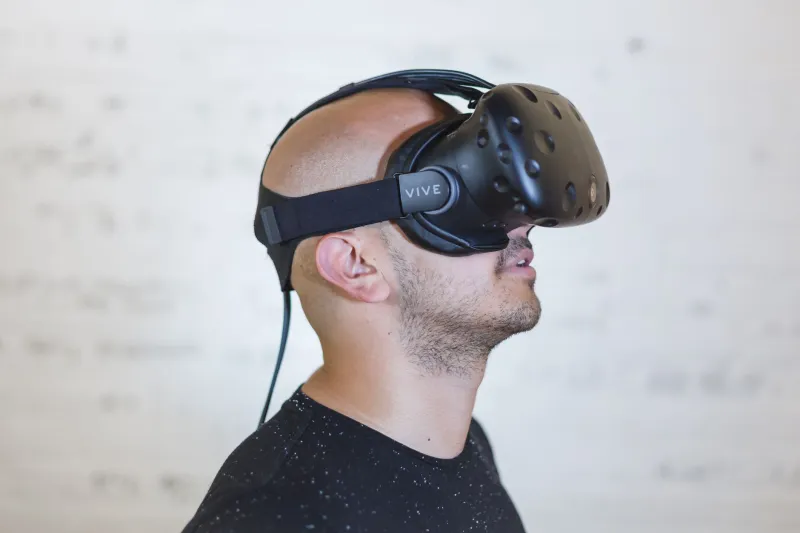
Comfort came up before depth. In the stereo screening, two people took the glasses off within 40 seconds. They didn't say the 3D was bad. They said they felt 'a bit seasick' or 'like my eyes were working harder than the picture'. In the 360° headset, three people asked if they could sit down. One said the headset felt 'heavy after a while' — not the weight, the expectation.
The most common positive comment about 360° wasn't about immersion. It was about control: 'I liked that I could look at the stall instead of the busker.' That's a spatial agency comment, not a resolution comment. It's also a clue for pitching. When commissioners ask what 360° adds, the honest answer might be: it hands the viewer a directorial choice. That's not always desirable. But it is a distinct offer.
The Accessibility Bit Nobody Expected
We included six people who described themselves as disabled or neurodivergent. We didn't segregate them. We just made sure the test included them, and that the venue had step-free access, quiet space, and captions on the 2D and stereo versions.
The unlabelled format exposed something useful: people who normally avoid 3D because of past discomfort didn't know what they were avoiding. That sounds obvious, but it cut both ways. Some said they would have skipped the stereo session if it had been labelled. Others said they were glad they didn't, because the clip was short and the seating let them opt out without fuss.
The lesson isn't 'hide the format'. It's 'design the opt-out before you design the spectacle'. In UK venues, that means clear signage at the door, a front-of-house person who can explain what's about to happen, and a short running time that doesn't trap anyone. Accessibility here isn't a bolted-on feature. It's the difference between a curious audience and a cautious one.
How to Run a Small Test Without Turning It Into a Thesis
You don't need a lab. You need consistency and consent.
- Use the same content and the same audio across formats. If the 360° version has spatial audio and the 2D version is stereo, you're testing sound, not vision.
- Rotate the order. Otherwise the first format gets the novelty vote.
- Ask for three words, then a conversation. Written answers alone flatten the surprises.
- Include people who don't work in tech. That's the whole point.
- Capture comfort, not just preference. Ask: did you want to stop? Did you know how to stop?
- Pay people if you can. A £20 voucher is not a research budget, but it's a start.
We used a simple paper form and a clipboard. The venue had a projector, a passive 3D screen, and four headsets. The total kit cost less than a mid-range lens. The insight was worth more than the kit.
What This Means When You Pitch to UK Commissioners
UK commissioners are rightly sceptical of format for format's sake. They've seen too many pilots where the headset is the idea. An unlabelled test gives you a different pitch: not 'this is immersive', but 'this is what changes when the audience isn't told what to expect'.
That's a stronger conversation. It moves the discussion from technology to attention. It also gives you honest language for the limitations. If your test shows that people feel unmoored in 360°, say so. If stereo makes a portion of the room uncomfortable, build that into the budget — not as a failure, but as a design constraint.
The other thing we noticed: people remembered the scene, not the format. A week later, in follow-up chats, most described the market, the busker, the rain. The 3D and 360° were scaffolding. That's not an argument against spatial work. It's an argument for making the scaffolding invisible. The best spatial piece is the one where the audience forgets they're using a format and remembers where they've been.
In 2026, with UK immersive funding tighter and audiences more format-literate than ever, that's a useful thing to test. Take the label off. See what's left.