One Wristband, Two Ways to Look: Running 3D and 360° Side by Side at a UK Festival

Photo: Basher Eyre, CC BY-SA 2.0, via Wikimedia Commons
Festival programmers love a neat strand. Give stereoscopic 3D its own slot, park 360° video in a side room, print two colours in the brochure, and assume the audience will sort itself out. On paper it is tidy. In the foyer, it is usually where the trouble starts.
A single ticket that promises immersive can mean a pair of glasses and a fixed seat, or a headset and a swivel chair. Those are different physical experiences, different cleaning routines and different access requirements. None of that is a reason to keep them apart. It is a reason to produce the shared room properly.
Start with the story, not the format
The curatorial case for mixing formats is simpler than the operational one. Audiences are not format natives. They do not arrive with a mental taxonomy of stereo capture, equirectangular stitching and head-mounted display optics. They arrive curious, or curious enough after a coffee. If the programme says 3D here and 360° there, many will pick the slot that fits their day, not the grammar that fits the story.
Put them side by side and something useful happens. A 12-minute 360° documentary about a Highland river sits next to a 3D dance film shot in a Manchester studio. One asks you to look around; the other asks you to look harder at a fixed frame. The contrast is the programme. It teaches format literacy without a lecture. It also stops either format becoming a novelty ghetto, which is still a risk when immersive work is corralled into a single strand and reviewed as a category rather than as films.
Scheduling: protect the changeover
The shared queue problem is usually a scheduling problem wearing a lanyard. If you alternate 3D and 360° every fifteen minutes, you will spend the day resetting a room and explaining why the thing someone booked is not the thing starting now.
Block the programme instead. Run 3D in a seated screening block of 45 to 60 minutes, then give the room a proper changeover. Run 360° as a longer drop-in session, perhaps 90 minutes, with timed entry every ten minutes. The formats can share a venue and a ticket without sharing the same twenty-minute slot. Build in a 20-minute buffer between blocks: enough to clear glasses, wipe headsets, reset chairs, restock wipes and let the next queue form in a space that is not the doorway.
If the ticket is a day pass, say plainly what it includes. A day pass that admits you to a 3D screening and a headset session is a good offer. A day pass that implies you can wander between both at any moment is a queue with a marketing problem.
Signage that works before the queue forms
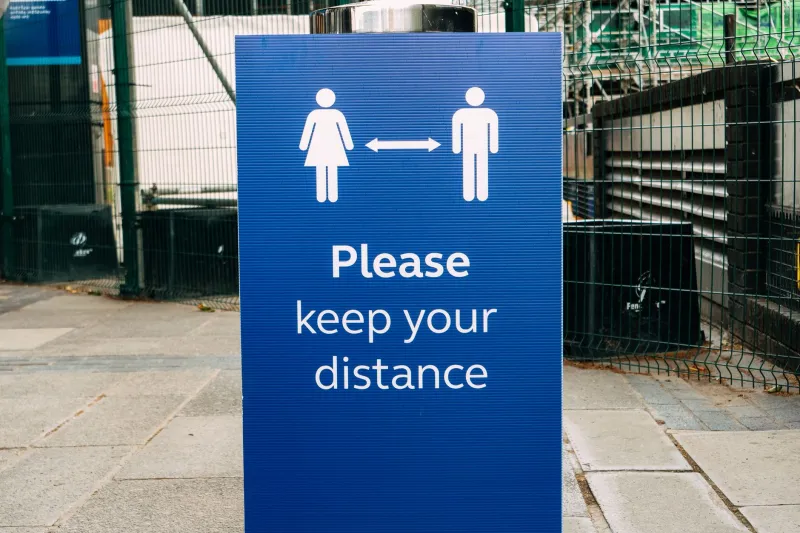
Immersive is not a useful sign. It describes the ambition, not the action. Put the format in plain English at three points: the ticket page, the door and the seat. Use icons plus words, never colour alone. Glasses on, sit back is a better instruction than stereoscopic presentation. Headset on, spin the chair is better than 360° interactive experience.
Signage should also set duration and body expectations. If a 3D block runs 70 minutes, say so. If a 360° piece is six minutes and standing, say that too. People plan their festival day around bladders, trains and friends. A small format note at the door prevents a large conversation at the front of the queue.
Use staff, not just QR codes. A printed running order pinned to the door will be read more often than an app that needs a login. If the festival has a brochure, give each format a short glossary box. Keep it to two sentences and avoid the word monoscopic unless you are absolutely sure it is helping.
Hygiene is a production task, not a footnote
Headset hygiene is not glamorous. It is also non-negotiable when one device passes through dozens of faces in an afternoon. Plan for disposable face masks, lint-free wipes, a dirty-to-clean table and a named person who owns the routine. A 60-second turnaround per headset is realistic only if you have enough headsets and enough staff to do it without rushing.
3D glasses need the same discipline. Provide lens cloths, a drop-off tray and a quick inspection before the next screening. If you are using active shutter glasses, check batteries before the doors open, not during the first ten minutes. Keep a small number of clip-on glasses for people who wear prescription frames. That is access, but it is also basic customer service.
Access needs a format-specific line
Access is not a separate strand bolted onto the side. It is part of choosing the room. For 3D, check whether glasses fit over prescription frames, whether clip-ons are available and whether the seating has a clear sightline for someone who cannot use a standard pair. For 360°, think about seated versus standing, swivel versus fixed chair, and whether the headset can be worn over glasses or with a comfort insert.
Captions need a format-specific plan. In a 3D screening, they belong on the screen in a size that survives the glasses. In 360°, caption placement is a design decision, not a last-minute overlay. If the piece has dialogue, ask where the captions sit in the sphere and whether they move with the viewer. Audio description and touch tours may need a separate slot. A quiet hour is not a gimmick; it is a way to let people try the headset without a queue breathing down their neck.
Brief the front of house like they are part of the show
Give every steward a one-page script. It should cover what the two formats are, how long each lasts, what to do if someone feels unwell, where the accessible toilet is, and who to fetch if a headset fails. Include the sentence that matters most: it is fine to take the headset off. Festival staff should not be diagnosing motion sickness. They should be empowered to stop the experience, offer a seat and get a first-aider if needed.
A short briefing also protects the audience from the most common failure: a confident explanation that is wrong. If the person at the door says the 3D film is the headset one, the queue will inherit that error for the rest of the day.
The curatorial case for keeping them together
Separate strands are easier to market. They are also easier to ignore. When 3D and 360° share a programme, the audience can compare how each format handles presence, scale and attention. A festival is one of the few places where that comparison happens in public, with a mixed audience rather than a room of specialists.
That does not mean pretending they are the same. It means being honest about the differences and designing the queue, the signs and the staff around them. One wristband, two ways to look. If the production is thoughtful, the audience will not need a glossary. They will just notice that they have been looking differently for an hour, and that the festival let them.