Cue Sheet Before Camera: Untangling Music Rights for UK 360° Productions
There is a particular kind of silence in a 360° screening when the picture is ready, the headset hygiene plan is sorted and the venue is keen — but the music paperwork is not. The film exists. The audience does not. In the UK, that gap is rarely about creativity. It is about rights.
Music clearance can feel like a separate production altogether: publishers, labels, collecting societies, composers, performers, distributors and venues all have a say, and their say does not always line up neatly. For immersive work, the usual complications are amplified because a 360° film may be shown in a gallery, at a festival, through a headset at a library, online as a trailer and on a venue's loop — sometimes all in the same month. Each use can trigger a different permission.
This is not legal advice. It is a production map, written for the people holding the shot list and the spreadsheet at the same time.
Two rights, one track
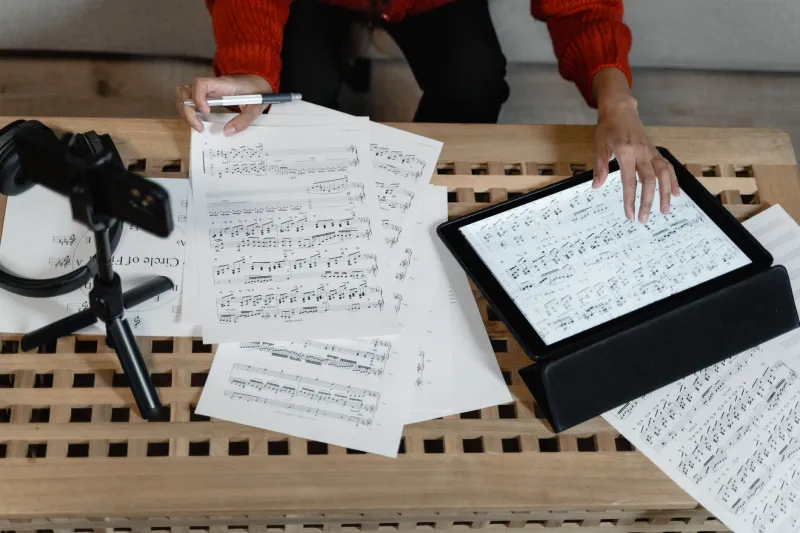
The first useful distinction is between the song and the recording. A piece of music usually carries at least two separate rights. The composition — melody, lyrics and arrangement — is controlled by the songwriter or publisher. Using it in a film requires a synchronisation licence, usually called a sync licence, from the publisher or their agent. The recording is controlled by the label or rights holder, and using that specific recording requires a master-use licence.
In the UK, PRS for Music and PPL often enter the conversation, but they do different jobs. PRS for Music licenses public performance and communication to the public of musical works. PPL licenses the public performance of recorded music. MCPS handles mechanical reproduction for certain uses. None of these automatically gives you the right to put a commercial track into a 360° film and make copies for distribution. That is a separate sync and master negotiation.
A small production might get lucky with a single email chain. A larger one might need separate conversations with a publisher, a label, an artist's manager and a producer. Either way, the question is the same: what exactly are you making, where will it be seen, and for how long?
What the venue licence actually covers
Here is where a lot of well-meaning projects wobble. A venue may hold a PRS for Music and PPL licence for music played in its public spaces. That blanket licence is useful for background music, interval playlists and maybe a DJ night. It is not a sync licence for the film's soundtrack. It does not give the filmmaker permission to embed a commercial track into a 360° work and then screen it.
Equally, a distributor or festival may ask for proof that music is cleared. That request is not box-ticking for its own sake. If the film travels, the rights need to travel with it. A licence limited to a single UK venue may not cover a festival screening in another city, an online excerpt, or a later gallery run. Territory, duration, media and exclusivity all matter. So does the difference between a public screening, a private preview and a promotional clip.
For 360° work, it is worth writing down every intended use early: venue playback, headset playback, online embed, trailer, social clip, education pack, archive copy. Then match each use to the licence. If the list changes, the paperwork should change too.
Commissioned scores are not a shortcut
Commissioning an original score can be simpler than licensing a known track, but it is not automatically clear. A composer agreement should set out who owns the copyright, what rights the production is getting, whether the score can be used in trailers and future screenings, and how the composer is credited. If session musicians are involved, their performances may need consent too. The Musicians' Union and similar bodies publish guidance worth reading before the first recording session.
There is also the question of the composer's own library or sample use. A score that borrows from a commercial recording can inherit the same clearance problem. Ask early. Put the rights terms in the contract rather than in a friendly email after the wrap party.
A realistic clearance workflow
Start with a script breakdown, not a wish list. Note every planned music cue, even the ones you think are temporary. Build a cue sheet with track title, artist, writer, publisher, label, duration, scene and intended use. This document will be asked for by distributors, venues and insurers, and it is much easier to build during pre-production than to reconstruct from memory.
Next, identify the rights holders. For well-known tracks, that can mean publisher and label research. For library music, check the licence terms carefully: some library licences cover online use but not public performance, or vice versa. For commissioned music, confirm the composer agreement covers the actual distribution plan.
Then request quotes in writing. Be specific about the project: a 360° documentary, runtime, UK territory, festival circuit, online trailer, venue screenings, duration of licence. Vague requests get vague answers. If the quote is too high, ask about alternatives — a different track, a shorter excerpt, a library option, or a composer-led replacement. Do not assume a lower quote covers more uses.
Finally, get the licence signed before the final mix. A verbal yes from a manager is not a deliverable. Keep a folder with the sync licence, master-use licence, composer agreement, cue sheet and any performer consents. That folder is part of the film's production paperwork, just like the camera report.
Where responsibility blurs
In practice, the filmmaker, venue and distributor often assume someone else is handling music. The filmmaker thinks the venue's licence covers the screening. The venue thinks the producer has cleared the film. The distributor thinks the festival has done it. Everyone is partly right and mostly exposed.
The cleanest approach is contractual: state who is responsible for what. The production should warrant that music is cleared for the agreed uses. The venue should confirm what its licence does and does not cover. The distributor should specify its deliverables, including cue sheets and proof of rights. If errors and omissions insurance is in play, music clearance will be part of the conversation. Do not leave it until the delivery deadline.
Budget before the shoot
Music is easier to budget as a line item than as an emergency. Put a clearance contingency in the production budget from the start, even if you plan to use library or commissioned music. If you are chasing a commercial track, factor in the time cost: negotiations can run for weeks, and a replacement at picture lock is rarely free. A temp track can be a creative tool, but it should be labelled as temporary in every edit note.
For UK immersive producers working with small venues and touring programmes, the safest pattern is boring and effective: clear early, license precisely, and keep the paperwork with the deliverables. The audience should never have to wonder why the headset is ready but the film is not.
A checklist for the edit bay door
- Cue sheet built and kept current.
- Sync licence for every composition.
- Master-use licence for every recording.
- Composer agreement covering screenings, trailers and future use.
- Performer consents where needed.
- Venue licence checked against the actual film use.
- Territory, duration and media confirmed in writing.
- Distributor deliverables and E&O requirements checked.
- Music clearance contingency in the budget.
- A single folder for rights paperwork, shared with the producer.
None of this makes a 360° film more immersive. It does make it showable. And in the UK's crowded immersive calendar, showable is the difference between a finished project and a very expensive edit.