Less Sphere, More Story: The Quiet Shift to 180° in UK Immersive Production
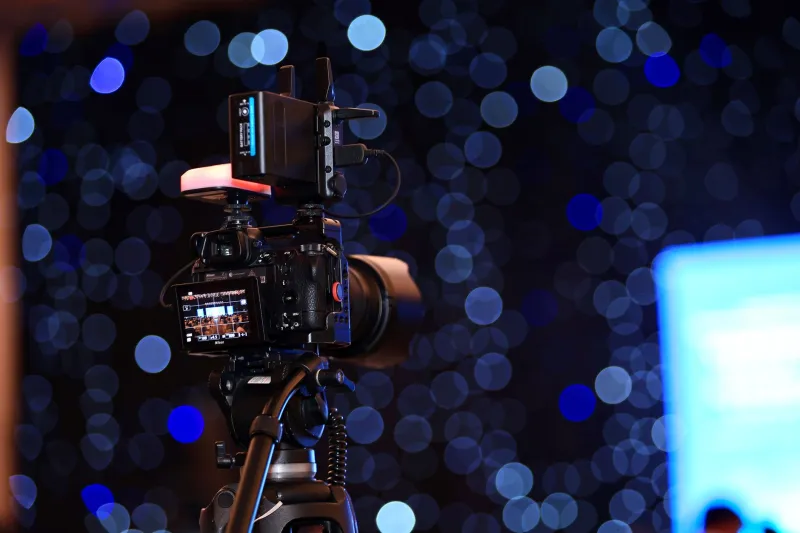
Ask a UK producer what changed most in the past two years and you might expect an answer about frame rates or codecs. Increasingly it is about geometry. Theatre captures, live music streams and corporate training builds are all drifting away from the full sphere and towards the 180° frame — usually stereo, usually destined for a headset, occasionally piped to a flat screen where the viewer does the panning.
That shift is easy to misread as a retreat. It is closer to a recalibration. Teams that spent years wrestling with stitchers and hiding tripods have worked out that half a sphere, framed well, can carry more of the story than a whole one framed badly.
The arithmetic of attention
Start with pixels per degree — the number that quietly decides whether a performer's face reads as a face or as a smudge.
An 8K equirectangular sphere spreads roughly 7,680 pixels around 360 degrees, which lands at about 21 pixels per degree. Point a comparable sensor budget at half the world, as a stereo pair covering 180° per eye, and the horizontal figure roughly doubles into the low forties per degree.
On a brightly lit festival stage that difference is a nicety. In a dimly lit studio theatre in Sheffield, or under the practicals of a training simulation, it is the whole ballgame. Low light plus a wide sphere plus aggressive compression is how immersive video earned its reputation for looking soft. Narrowing the capture gives you back the headroom.
Why the neck usually wins the argument
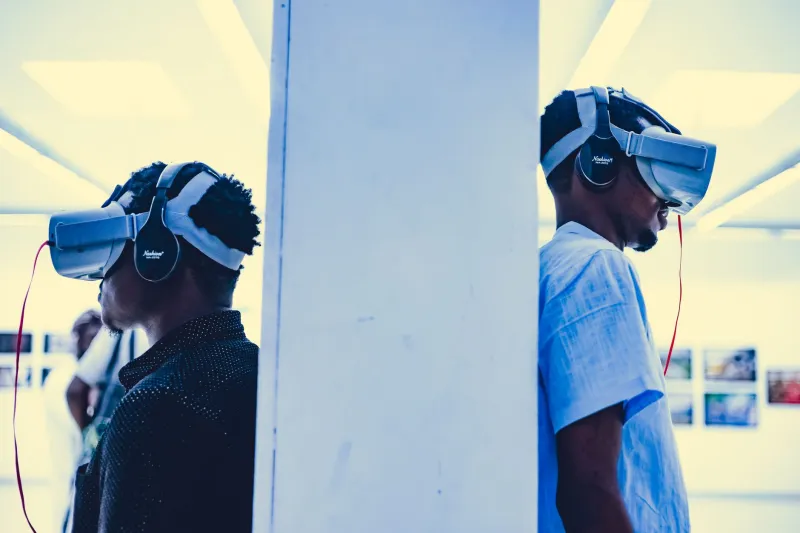
The second force is physical. A full 360° invites people to look behind them. Most do not. Watch a room of first-time headset users and you will see the same pattern: a sweep of maybe 100° either side of the opening frame, then a return to centre. Everything you placed behind them is scenery nobody paid for.
Seated audiences are the clearest case. In a theatre capture, a 180° frame maps neatly onto where the audience already is — facing the stage. It also makes life easier for the front-of-house team, who can hand over a headset knowing there is no back wall waiting to reveal the crew, the cabling or the fire exit.
That is not a small accessibility point. Immersive work still has a habit of asking people to do things they would rather not: stand, spin, hold a pose. A narrower field of view reduces the amount of body work the format demands, and for audiences with limited mobility or vestibular sensitivity that is a genuine improvement rather than a compromise dressed up as one.
What it does to the edit
Post-production is where the switch pays off in ways producers can actually budget for.
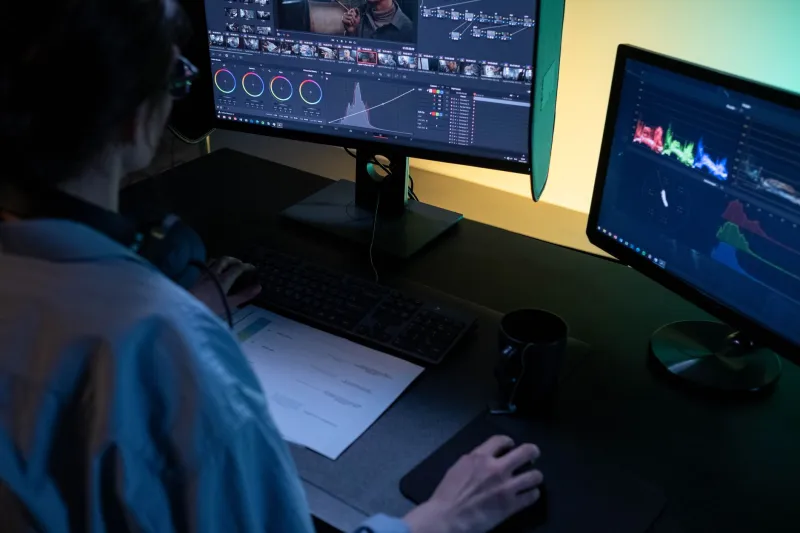
Stitching a stereo 180° pair is a friendlier job than wrestling a six-lens sphere into alignment, particularly when the action sits close to camera. Fewer lenses means fewer seams, fewer exposure mismatches and faster turnarounds. A team that used to schedule a week of stitching can sometimes compress that into days, and the saved time tends to go back into colour and sound rather than into the bin.
The trade-off arrives at the edges. A 180° frame has a border, and that border is a hard cut. If a director wants to reframe in post — pushing in on a soloist, drifting across a stage — there is less canvas to work with. Full sphere capture buys options in the suite. Narrow capture buys quality in the moment. Choose according to whether your editorial decisions happen on set or two weeks later.
The other thing to settle early is mono versus stereo. Stereo 180° doubles the files and the headaches, but it is the version that makes headsets feel like windows rather than screens. For music and performance, most teams now argue it is worth the extra storage.
Where the sphere still earns its keep
None of this retires the full 360°. Several jobs still want the whole room.
Heritage and documentation work is the obvious one. If the point is to record a space — a gallery before it is rehung, a listed building, a workshop about to be converted into flats — the sphere is the honest format. Nobody wants a record that quietly excludes the corner where the interesting thing was.
Interactive installation work is another. Where the viewer controls the view and the piece is about exploration, cutting the world in half removes the reason to look around. Six-degrees-of-freedom experiences built in game engines also assume a surrounding environment, and a 180° plate leaves visible holes the moment someone leans in.
Then there is the quiet pragmatism of reuse. A sphere can be cropped to 180° for the headset version and still keep a flat 16:9 cut for the website. Shoot narrow and that door closes, at least until the next shoot.
The trade-offs nobody puts in the pitch deck
Two practical warnings. First, 180° is unforgiving of camera movement. A slow drift that feels lyrical inside the sphere can read as a lurch when the frame has edges you can see. Lock off more than you think you need to.
Second, the format changes how talent performs. A presenter who knows the whole room is watching behaves differently from one who knows the frame ends at their shoulder. Brief them properly, or you will get a great deal of eye contact with the lens and very little else.
What 2026 looks like
The direction of travel is clear. Spatial video capture has arrived on consumer phones, headsets in UK venues are more common than they were, and the tools for stereo 180° post are cheaper and better documented than at any point. Meanwhile the teams building training content — a growth area across health, manufacturing and energy — mostly want something a learner can watch once, comfortably, without a briefing on how to look around.
That points to more 180°, not less. But it also points to a maturing craft: fewer productions shooting the sphere by default because it sounds impressive, and more choosing a frame that suits the room, the story and the people watching.
Less sphere is not less ambition. It is simply a decision made on purpose.