Beyond the Picture: How UK Sound Teams Are Making Spatial Audio the Point, Not the Polish
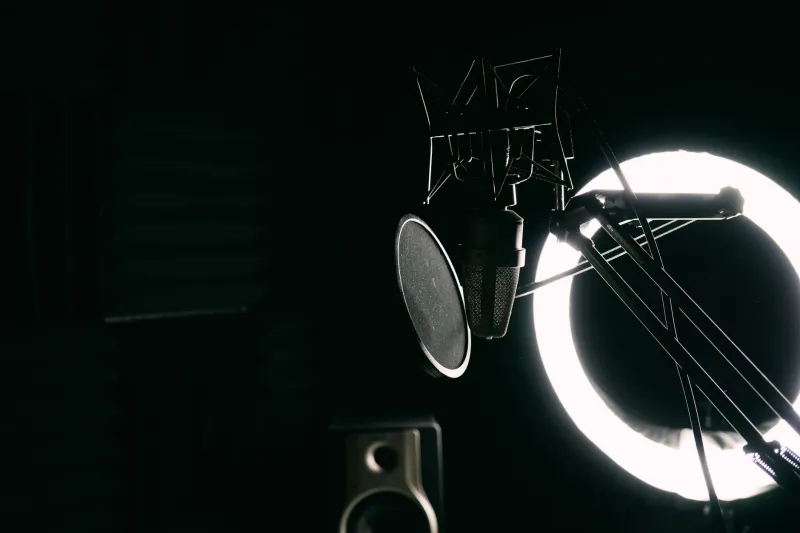
360° video has a habit of being sold as a visual format. Look at the thumbnails, the camera rigs, the endless talk of resolution and frame rates, and you could be forgiven for thinking the whole thing is about what you see. But spend five minutes inside a genuinely good immersive piece — a remote landscape, a crowded venue, a quiet archive — and the give-away is usually the sound. It is the thing that tells your brain where you are. In the UK, a quiet shift is under way: sound teams are no longer treating spatial audio as the final polish. They are building it into the shape of the work.
That matters because immersive video has become much more accessible. Consumer 360 cameras, cheaper stitching tools and browser-based players have lowered the barrier to entry. Audio has not always followed at the same pace. For years, many small productions captured a stereo bed, maybe added a few spot effects, and hoped the platform would do the rest. On a phone, with compressed playback and a pair of earbuds, that approach can just about pass. On a decent headset, or even a good pair of headphones, it falls apart. The picture says you are in a cathedral. The sound says you are in a cupboard.
The stereo habit we brought with us
Part of the problem is workflow. Most small teams come from a video-first background. The camera is planned, the shot list is written, the location is recce'd. Audio is often added as a line item near the end. That is understandable when budgets are tight and clients are focused on what the picture looks like. But spatial audio is not a plug-in you can bolt on at the end and expect to feel natural. It needs decisions at the capture stage: where the microphone sits, what it is listening to, which direction the scene is facing, and how the viewer is likely to move.
The other issue is delivery. Social platforms and web players still compress audio aggressively, and not every viewer supports the same spatial format. That has encouraged a lowest-common-denominator approach: make a stereo mix, call it done, and move on. The result is a lot of immersive video that looks immersive and sounds flat. The missing half is not a niche concern for audiophiles. It is the difference between a demo and an experience.
What UK sound teams are doing differently
Across the UK, sound designers and small studios are testing a more joined-up approach. The common thread is not a single tool or format. It is a willingness to treat audio as spatial from day one.
Ambisonic recording is often the starting point. A single ambisonic microphone captures a full spherical soundfield, which can later be decoded to binaural for headphones or to a speaker array for installation. First-order ambisonics is still the most practical option for many small teams: the microphones are affordable, the files are manageable, and the workflow is well supported. Higher-order ambisonics gives more precise localisation, but it also means more data and more careful handling. For a regional studio making a 360° documentary or a virtual venue tour, first-order can be plenty if it is recorded and mixed with care.
Binaural mixing is the other big shift. A binaural mix is designed for headphones, using subtle timing and level differences to place sound around the listener. It is not new technology, but it has become much more practical for independent producers. Free and low-cost plug-in suites, better headphone monitoring and more accessible DAW workflows mean a two-person team can build a convincing headphone-first mix without booking a high-end room. That is important for UK creators working outside London, where travel and studio costs can eat a project alive.
Object-based audio is the third piece. Formats such as Dolby Atmos and MPEG-H allow sounds to be positioned as objects rather than locked to channels. That can be powerful for interactive work, where the viewer's head movement or choices change what they hear. It is also useful for installations and live events, where the same content may need to play back on different speaker layouts. The catch is complexity. Object-based workflows can be overkill for a short 360° piece destined for a headset. The trick is to match the format to the job, not to use the most impressive tool on the shelf.
The regional shift
What is notable in 2026 is where this work is happening. Spatial audio is not confined to Soho post houses or big broadcast innovation labs. You can find it in Bristol's creative technology scene, in Manchester's independent production community, in Glasgow's sound art and performance networks, and in Cardiff and Belfast where heritage and language projects are using immersive media to reach new audiences. University audio labs and BBC research teams have helped build the knowledge base, but the practical momentum is increasingly regional.
The cost curve has helped. An ambisonic microphone that would once have been a serious investment is now within reach for a small studio or a freelance sound designer. Reaper, combined with the IEM Plug-in Suite and a growing library of spatial tools, gives independent producers a credible route into ambisonic and binaural work. Online training and peer networks have shortened the learning curve. None of this makes spatial audio easy. It makes it possible.
Practical starting points
If you are making immersive video outside a high-end post house, the best advice is to start small and be deliberate.
- Capture with intention. Use an ambisonic microphone if you can, but always record a backup stereo or mono track. Note which way the microphone was facing and where the camera was in relation to it. That simple metadata will save hours later.
- Record room tone and movement. Spatial audio is as much about the space between sounds as the sounds themselves. Capture the hush of a gallery, the hum of a venue, the wind on a coastal path. These beds make the scene feel real.
- Mix for headphones first, then check elsewhere. Most 360° audiences will listen on earbuds or headphones. Build the binaural mix there, but check it on speakers and in mono. If it collapses completely, the balance is probably too fragile.
- Keep your stems. Deliver a binaural mix for the platform, but keep the ambisonic master and any object stems. Formats change, and a project may have a second life in an installation or a headset app.
- Treat accessibility as part of the mix. Spatial audio can guide attention, but it should not be the only way to understand what is happening. Captions, audio description, clear visual cues and a well-balanced mono fold-down all matter. Immersive should not mean exclusive.
The point, not the polish
The UK's best immersive work is starting to sound as considered as it looks. That is not because every creator has a Dolby-certified room or a research lab on speed dial. It is because sound teams are bringing audio into the conversation earlier, and because cheaper tools have made spatial capture and binaural mixing realistic for regional studios and independent creatives.
For 3D60, the interesting shift is philosophical as much as technical. Spatial audio is not the icing on a 360° video. It is half the format. Once you accept that, the workflow changes, the budget changes, and the experience changes. The picture can show you where you are. The sound is what makes you believe it.