Who Tests the Headset First? Why UK Immersive Venues Are Putting Front-of-House at the Heart of the Design
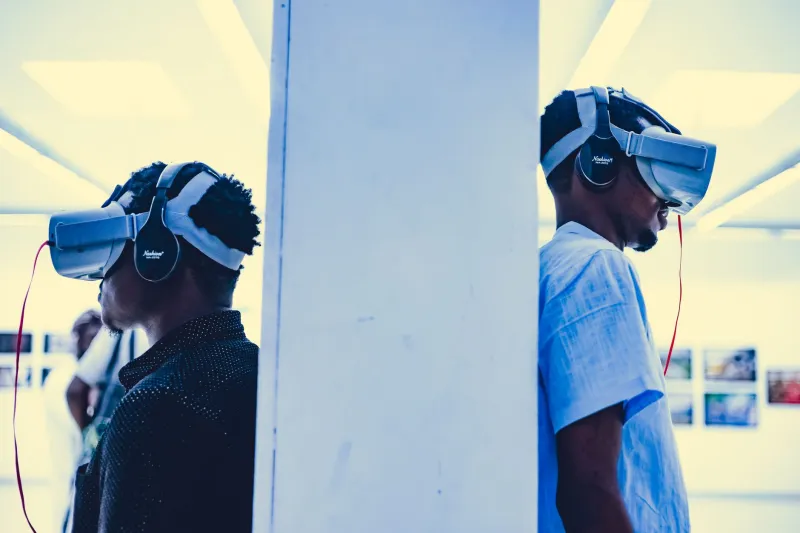
Here is a quiet truth about UK immersive exhibitions: the most important piece of technology in the room is usually a person in a lanyard holding a cleaning cloth.
We spend a lot of time in this sector talking about headsets, projectors, tracking, frame rates and the creative ambition of the work. We spend comparatively little time talking about the twelve minutes before a viewer puts anything on their face — the greeting, the queue, the explanation, the hygiene routine, the moment where someone who has never worn a headset decides whether this is going to be fun or faintly humiliating.
That twelve minutes is designed by front-of-house staff, often by accident, often without being asked. It should be designed on purpose.
The last metre of the pipeline
Most production teams hand over a finished build and a one-page briefing. The venue then improvises an operation around it. That improvisation is where the audience experience is actually made — and it is where accessibility either happens or quietly doesn't.
Consider what a steward is managing simultaneously: someone who is nervous, someone who wears glasses, someone with a hearing aid, someone who uses a wheelchair and needs the headset height adjusted, someone who is claustrophobic, someone who is eight years old, and someone who is simply running late. A good front-of-house team reads that room in seconds and adjusts. A build that assumes a standard viewer makes their job much harder.
Hygiene is a design language
Visitors do not evaluate your hygiene protocol in the abstract. They read it. If they see a used wipe on a table and an unlabelled spray bottle, they will assume the worst, no matter how thorough the actual clean is.
Venues that get this right make the routine visible and calm. Fresh covers in a tray, used ones in a sealed bin, hands sanitised before and after, a member of staff doing the swap in front of the visitor rather than behind a curtain. It reads as care. It also cuts down on the awkward questions and, in practice, on the number of people who quietly decline.
The design implication is straightforward: build a cleaning station into the layout with enough surface for a real turnaround, not a shelf in a back room. If the operation needs thirty seconds per visitor, the floor plan should say so.
Queues are part of the storytelling
A queue is the first chapter of an immersive experience, whether you wrote it or not. If people spend ten minutes in a corridor with no information, they arrive at the headset already mildly annoyed and with an unhelpful set of expectations.
Some UK venues have started treating the wait as pre-show. Short looping captions explaining what the viewer will see. A tactile object to handle. A staff member doing a two-minute 'what to expect' for the group at the front. It reduces anxiety, it gives people something to do, and it means the handover conversation can be shorter because half the questions are already answered.
It also helps to be honest about duration before the headset goes on. Nobody minds a three-minute piece. People do mind discovering it was three minutes after they expected twenty.
The calm explanation
There is a particular tone of voice that makes immersive work accessible, and it is almost never taught. It is calm, specific and free of jargon. It says: the film is about four minutes long, you can turn your head, there is nothing to hit, if you feel wobbly take it off and sit down, I will be right here.
That last line does an enormous amount of work. A first-time viewer who knows a human is watching out for them will tolerate far more novelty than one who suspects they have been left alone with an expensive piece of kit.
Staff who deliver this well are performing a craft skill. It deserves to be recognised in contracts, in training and in the credit list, not just in a WhatsApp group at the end of a run.
Troubleshooting as part of the drama
Things break. Tracking drifts, audio cuts out, a headset overheats, a controller pairing fails. In a poorly planned show, the fix is an interruption: the visitor stands blind while a stranger fiddles with their headset.
In a well-planned show, the fix is rehearsed. There is a scripted line — 'give me one second, I'm just resetting your view' — and a plan for what the visitor does meanwhile. Some venues keep a second headset warm so a swap takes fifteen seconds. Others build a natural pause into the piece at a predictable point so maintenance can happen in the gap.
That is operations thinking feeding back into creative decisions, and it only happens when production teams talk to front-of-house before the build is locked, not after.
The operational budget test
A useful question for any UK immersive project: what proportion of the budget is allocated to the people who will run it?
If the answer is 'none, the venue handles that', you have not designed an audience experience. You have designed a file. Some of the strongest work in the sector right now treats staff time as a line item from the start — paid testing days, a written operations script, a training session that includes putting the piece in front of the team and asking them what's wrong with it.
That last part is the bit people skip. Staff are the cheapest user-testing panel you will ever have, and the only one that will still be in the room on a wet Tuesday in February.
A short checklist for venue and production teams
- Put every member of front-of-house through the piece in the first week, including part-time and freelance staff.
- Ask them three questions: what confused you, what felt uncomfortable, what did visitors ask that you couldn't answer?
- Write the handover script together, then let staff adapt it in their own words.
- Make the cleaning routine visible and give it physical space.
- Put duration, content warnings and exit instructions in the queue, not just at the headset.
- Rehearse one failure scenario per show and agree the line staff will use.
- Include front-of-house in the debrief and in the credits.
The argument, briefly
Immersive technology does not become accessible at the point of contact with a headset. It becomes accessible in the seconds before, when someone decides whether to trust the thing being offered. In the UK, that decision is usually made in the presence of a steward on a zero-hours contract who has had twenty minutes of training.
Fund the training. Pay for the testing day. Write the operations script as carefully as the voiceover. The audience will never know your name for it — but they will remember that it felt easy, and easy is the whole point.