Green Screen Is Not the Teacher: How UK Drama Schools Are Rehearsing for the LED Volume
When the lights go down in a drama school studio, the usual cues are a blackout and a hush. At a handful of UK institutions this autumn, the cue is different: a wall of LED panels flickers into a Welsh hillside, a camera track rolls forward, and a student actor has to hit a mark while a virtual sun moves behind her. Welcome to rehearsal in the volume.
The phrase sounds like a tech brochure. In practice, it is closer to a very strange studio class. Actors are not learning to become Unreal Engine operators, and they are not being trained as motion-capture technicians. They are being asked to do the thing drama schools have always done — listen, adjust, repeat — while the world around them changes in real time. The interesting question is not whether UK conservatoires can afford LED walls. It is whether stage craft genuinely survives the transfer.
Stage craft, meet frustum
The first thing that goes is the assumption that the actor is the centre of the frame. In theatre, the audience looks where it likes. On a virtual production stage, the camera has a frustum, the LED wall has a sweet spot, and the lighting has already been baked into a scene that may not exist yet. Actors have to learn where the camera can see them, where the wall can convince them, and where a slight shift in position will make the virtual horizon slide.
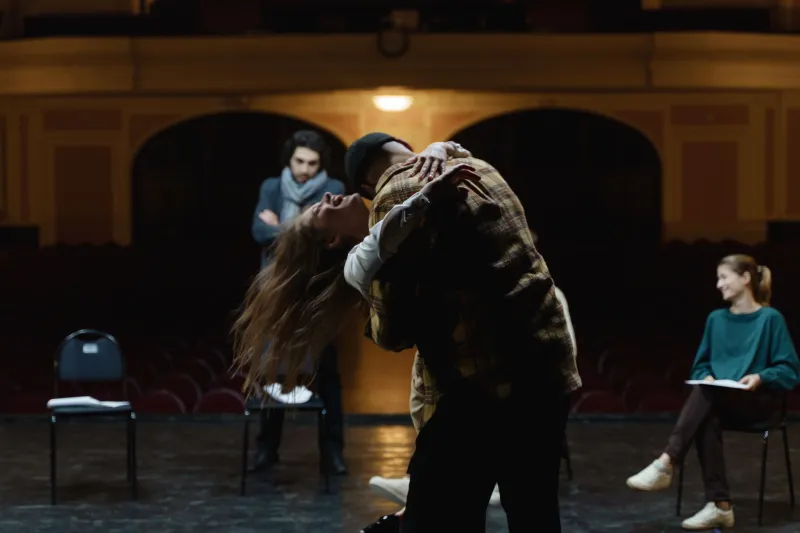
That sounds technical. Tutors I spoke to describe it as a spatial discipline. One Bristol-based acting tutor calls it ‘thinking in three dimensions while standing still’. Students rehearse with 360° playback so they can watch themselves from inside the scene rather than from the usual monitor angle. They practise scenes where the environment changes between takes — a daylight exterior becoming dusk, a train carriage becoming a station platform — and they have to keep the emotional through-line without pretending the change is not happening.
The stage craft that translates best is not the big gesture. It is the quiet stuff: intention, listening, stamina, the ability to hold a thought while somebody moves a light. The stage craft that needs retuning is scale. A performance built for the back row of a theatre can look like a caricature when the camera is two feet away and the background is a rendered coastline. Screen acting has always taught that lesson. The volume simply makes it more public.
What the curriculum actually looks like
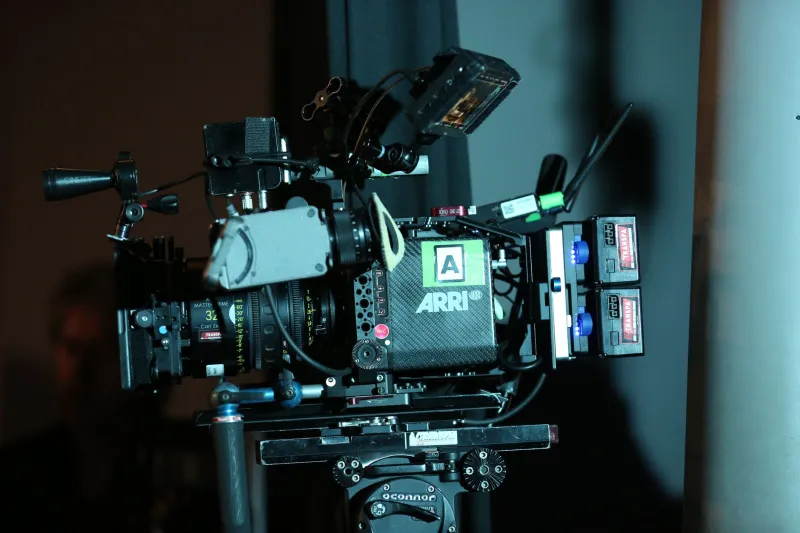
Not every drama school has a full LED volume, and the ones that do are careful not to make it the whole story. At the National Film and Television School, virtual production sits alongside more traditional screen training, with actors working with directors and technical teams rather than being handed a headset and told to imagine harder. At Royal Central and LAMDA, the conversation tends to start with screen and performance craft before it reaches the kit list. At Bristol Old Vic Theatre School and Manchester School of Theatre, the emphasis is on rehearsal room practice: how to work with previs, how to respond to a virtual set, how to keep a scene alive when half of it is being built around you.
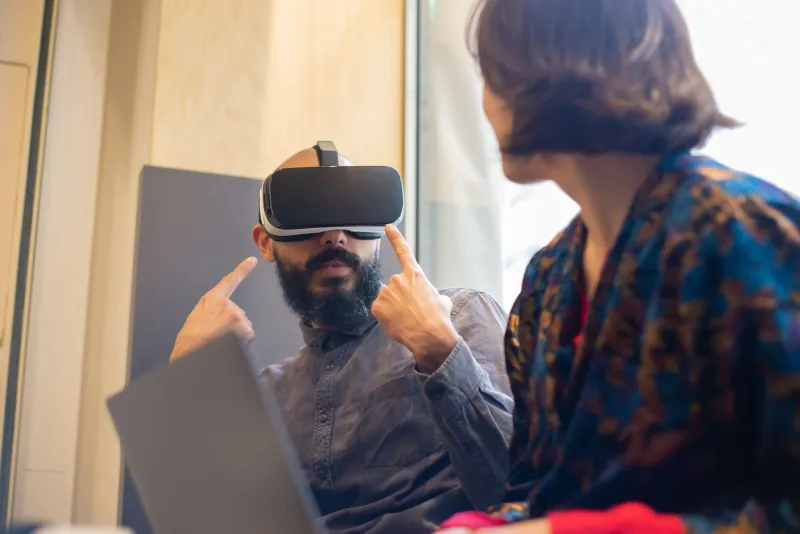
The 2026 intake is likely to meet a mix of these approaches. Some students will rehearse in a small LED setup with a fixed camera track. Others will use VR headsets to walk through a 360° set before standing in a conventional studio. A few will spend time in regional production hubs where a volume is shared between film, television and games. The common thread is not the hardware. It is the rehearsal ethic: try it, watch it back, adjust, go again.
That is where drama schools have an advantage over short courses. A volume stage can teach a crew how to calibrate a wall. It takes longer to teach an actor how to hold a scene when the wall is recalibrating around them. Conservatoires are good at repetition, feedback and the slow accumulation of instinct. If virtual production training is going to produce performers rather than button-pushers, that is the bit worth protecting.
The regional gap
London still has the concentration of volume stages, virtual production vendors and post houses. It also has the short courses, the evening classes and the networking nights. Outside the capital, the picture is patchier. Bristol, Cardiff, Manchester, Leeds, Glasgow and Belfast all have production activity and training ambitions, but they do not all have the same access to a working LED stage. Some schools borrow time on a commercial volume. Others rely on smaller walls, green screen and VR rehearsal. That is not automatically a weakness — a green screen can teach spatial imagination — but it does change what students can practise.
The risk is a familiar one: virtual production becomes another London-centric skill, with regional actors expected to commute for the privilege of learning how a camera track behaves. The more interesting response is to treat the volume as one tool among many. A drama school in Salford does not need to replicate a Pinewood stage to teach the fundamentals of acting with real-time environments. It needs tutors who understand both performance and production, and enough access to a volume to make the lessons concrete.
Not a tech qualification
There is a temptation to turn every new production tool into a module. Actors do not need to become Unreal specialists, just as they do not need to become gaffers to work under a lighting rig. They do need enough literacy to ask useful questions: where is the camera going, what is the wall doing, why is the horizon moving, and what happens if I take half a step to the left?
That literacy is also a route to better collaboration. Virtual production works when departments talk to each other early. Actors who understand the constraints of a volume are less likely to be treated as a problem to be solved after the set has been designed. They can be part of the rehearsal conversation, which is where the good stuff usually happens.
What comes next
The next generation of UK performers will probably not call themselves virtual actors. They will be actors who can work in a volume, in a 360° film, on a green screen, on a stage, and in a motion-capture suit without treating any of those as a personality change. That is a healthier outcome than creating a separate track for ‘virtual performance’. The craft is still the craft. The volume is just a very demanding scene partner.
For 3D60, the story to watch is not which school buys the biggest wall. It is whether training keeps pace with production outside London, and whether actors are given room to rehearse in these spaces rather than simply demonstrate them. A volume can render a world in seconds. It still takes a human being to make that world feel like somewhere worth standing.