The LED Stage Isn’t the Problem: Why UK Virtual Production Still Leans London
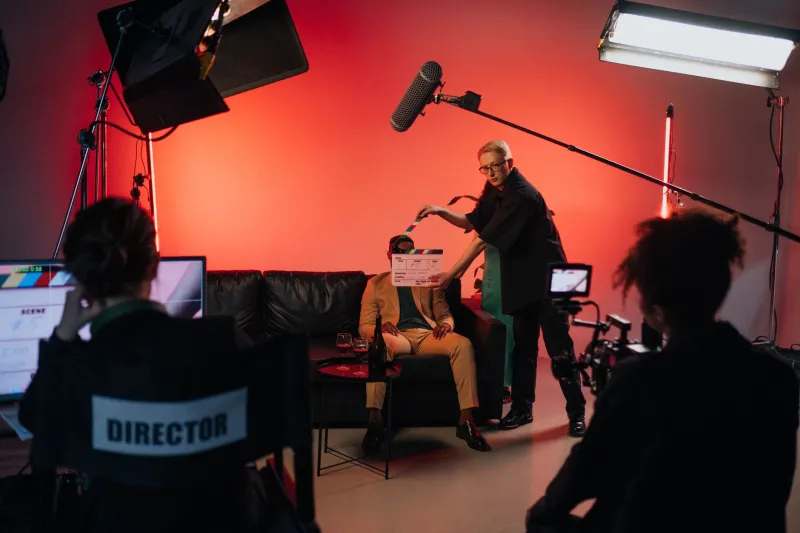
For years the complaint was simple: there wasn’t an LED volume north of Watford. That complaint no longer holds. MediaCityUK has its virtual production offer, Yorkshire has stage capacity, Bristol and Cardiff sit within a short drive of each other, and there’s kit in Glasgow and Belfast too. On paper, the UK now has a distributed virtual production footprint.
So why does so much of the work still feel like it’s booked from a desk in Soho?
The stages arrived. The phone didn’t ring.
Walk into a regional volume on a quiet Tuesday and you’ll often find the same thing: excellent hardware, a small core team, and a diary with gaps in it. Meanwhile producers in London are quoting clients for volume days at rates that suggest demand is healthy.
Part of that is simply market maturity — buyers book what they know. But it would be dishonest to pretend the barriers are all perception. Some are structural, and they’re worth naming plainly.
Price was never the whole argument
Regional stages are usually cheaper per day. That’s the headline, and it’s genuine. But day rate is a fraction of what a production actually costs, and the hidden lines are where regional bids quietly lose.
Crew travel and accommodation. Kit transport. The cost of getting a director, a DOP and a VFX supervisor to a location for a recce. The risk premium a producer attaches to an unfamiliar team. None of that shows up in the rate card, and collectively it can wipe out the saving.
The answer isn’t to cut rates further — that just devalues the regional offer. It’s to build local crew depth so that a production doesn’t have to import half its department heads. Which brings us to the awkward bit.
The skills gap is really a pipeline gap
There’s a tendency to describe the regional problem as a shortage of “virtual production talent”. That’s too vague to be useful. What’s actually missing, in most places, is the middle: people who can light for an LED wall, who understand colour pipelines and frustum matching, who can prep assets that hold up at 4K on a curved surface, who can wrangle tracking on a wet Tuesday. The senior expertise exists. The entry points don’t.
And entry points are built by volume of work. A stage that runs four jobs a year cannot sustain an apprenticeship, a trainee scheme or a reliable freelance bench. This is a chicken-and-egg problem that the market will not solve on its own, which is why the various regional screen agencies and skills bodies matter more than they’re usually given credit for. Short, practical, paid placements attached to real shoots are worth more than another panel discussion about the future of the metaverse.
Funding follows relationships, not maps
There is no shortage of public money aimed at regional production. What there is a shortage of is routes into it for people who don’t already know the officers involved. Funds get distributed through networks, and networks cluster.
If a Leeds-based company and a London-based company both apply for the same pot, the London one often wins not through better craft but through better paperwork and pre-existing trust. That’s not corruption. It’s just how relationships compound.
A few things would help. Co-commissioning requirements that pair a capital-based producer with a regional facility for a defined share of the spend. Slates that fund development, not just delivery, so regional companies can build slates rather than service other people’s. And simpler, faster application processes — an indie with three staff cannot afford a two-month bid cycle for a five-figure grant.
What London habits still need to change
This is where it gets uncomfortable, so let’s be specific.
Stop treating regional facilities as overflow. Booking a northern stage only when the London diary is full keeps regional teams in a perpetual sub-contractor position, with no ability to plan or invest.
Bring regional crew into pre-production, not just the shoot. If the first time a regional DOP sees the asset build is on the day, you’ve already decided they’re a technician rather than a collaborator.
Reconsider what “remote” means. Review over a decent stream, virtual scouting, cloud-based asset review — these are all normal now. The assumption that everyone senior must physically be in the same room is a habit, not a requirement, and it quietly excludes anyone with caring responsibilities or a mortgage outside the M25.
Pay properly and promptly. Regional freelancers talk to each other. A company that pays in ninety days will find its pool of willing crew shrinking, whatever the day rate says.
A modest prediction
The interesting shift over the next couple of years probably won’t be another volume opening. It’ll be the emergence of regional studios that own their own IP — short-form spatial pieces, branded work, broadcast segments — rather than waiting to be hired for someone else’s shoot. That’s the point at which a cluster becomes an industry rather than a facility.
None of this requires London to lose. The capital has the density, the clients and the post houses, and that won’t change quickly. But a genuinely national spatial media sector needs the work to flow in both directions, and right now it mostly flows one way.
The LED walls are up. The next job is the harder one: changing who gets to stand in front of them.