Touch, Rumble, Breeze: Building a Haptic Layer That Doesn't Fight the Headset

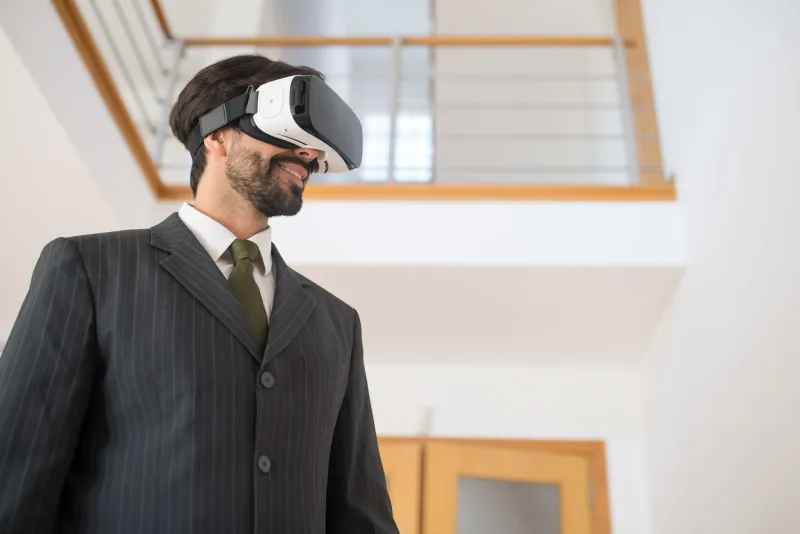
Photo: visitor wearing haptic vest and VR headset in immersive installation, via www.geographicus.com
There's a moment in a good immersive piece when the picture stops doing all the work. The headset shows you a platform edge, and the floor gives a low, patient hum. You see a coastline, and something cool moves past your ankles. Nobody in the room says "haptic" out loud, and that's usually the sign it's been designed properly.
Over the last couple of years, UK teams running 360° film, 3D capture and small-scale virtual production have been quietly bolting a second channel onto their work. Not a new headset, not a higher resolution — a layer of touch and motion that sits underneath the visuals. Vests, seat transducers, rumble platforms, the occasional fan. It's cheap enough now to be a real option for a regional venue, and fiddly enough that plenty of people get it wrong.
What touch does that pixels can't
Spatial video is very good at place and very bad at weight. You can show someone a cathedral nave in immaculate stereo 3D and they'll still feel like a ghost drifting through it. A shove of low frequency under the seat fixes about half of that in a single cue.
The teams getting this right tend to follow one instinct: haptics is punctuation, not punctuation marks everywhere. If the floor rumbles for the whole eight minutes, the audience stops registering it after ninety seconds and starts wondering if something is broken. The strongest uses we've seen are brief and specific — a door closing behind you, the tick of a level crossing, a hand on a shoulder during a quiet bit of documentary.
There's also a nice side effect for anyone thinking about neurodivergent audiences and people who find screens tiring. A physical cue can carry information that the image is struggling to land. Used sparingly, it reduces the amount of visual attention a scene demands.
The kit, roughly, and what it costs
Four options come up again and again in UK installations.
Seat transducers and bass shakers. The workhorse. A transducer bolted or clamped under a seat, fed from an amplifier, costs somewhere between £120 and £400 per seat depending on how much you like your fillings. Robust, invisible, no hygiene problem, no batteries.
Floor rumble. A platform or a set of shakers under a standing area. Brilliant for queues, processions and anything where the audience is walking. Also the option most likely to annoy your building. Grade II floors, sprung dance floors and anything above a neighbour's ceiling all need a structural conversation before anyone drills.
Vests. The most visible layer and the most demanding. Expect £300–£900 per unit, plus batteries, charging, firmware updates, three or four sizes, and a cleaning regime that nobody enjoys. They're wonderful for upper-body cues — heartbeat, breath, impact — and they are the first thing to fail on a busy Saturday.
Directional fans. Honestly underrated. A few hundred pounds, a small compressor or fan unit, and you have weather. Watch the airflow across the audience rather than at them, and be careful in air-conditioned rooms where the heating bill is already a negotiation.
As a rough planning figure: a haptic layer worth having rarely comes in under 15% of the overall install budget once you've counted amplifiers, cabling, spares, cleaning materials and staff time.
Comfort is the design brief, not the afterthought
This is where immersive work separates itself from a fairground ride. A surprising number of people will not want their body moved, squeezed or blown on, and some of them have very good reasons: vestibular conditions, sensory processing differences, recent surgery, back and neck injuries, pregnancy, implanted medical devices.
Build a three-state choice into the booking flow rather than the door: off, gentle, full. Let people change their mind at the door and halfway through. Put a physical switch within reach of a seated person, not behind a locked panel. Brief front-of-house to offer the quiet option first, without a lecture.
On implanted devices and magnets in some vests, check manufacturer guidance directly. Don't crowdsource a medical exclusion list from a forum — write it with a clinician and say plainly what you don't know.
And test with a mixed-age room before opening night. A cue that reads as a gentle tremor to a twenty-five-year-old can feel like a jolt to someone with a replaced hip.
The cleaning rota nobody budgets for
Vests sit against skin, over a T-shirt if you're lucky and over nothing but sweat if you're not. A realistic turnaround is six to eight minutes of attention between wearers and a deeper clean at the end of the day. Buy disposable or washable liners, stock base-layer tops in three sizes, and buy two spare vests for every ten you run.
Also budget for the boring stuff: hairs in the mesh, foundation on the collar, the one unit that always smells faintly of a festival.
Sync, and a word with the sound team
Haptics is an audio channel, so treat it like one. Pull it from the same timecode as the picture, give it its own output, and test latency with something clap-like before the first audience arrives. Anything under about 30 milliseconds feels tight; beyond that, the illusion starts to lead or lag.
The other conversation is frequency. Subwoofers and floor shakers fight over roughly the same territory, and two engineers quietly boosting the same band is how you end up with a room that feels like a lorry passing. Decide early who owns what.
A short list before you spend anything
Who cleans it, and when? Where is the off switch, and can a seated visitor reach it? What happens if a vest dies mid-run — does the show stop, or does someone quietly swap it? What's the power draw and the heat? What are the spares lead times, including anything shipping from outside the UK? And is there one cue — just one — that you'd genuinely miss if the haptics were unplugged?
If the answer to that last question is no, save the money and spend it on the sound mix.